Hello! This is Mark, G4FPH, sending greetings from the county of Staffordshire, in central England ('The Midlands'). Welcome to my website celebrating 50 years of licensed transmission in amateur radio, 1976 - 2026.
Feel free to browse the whole site. The site is written in pure html and so it should work with any browser. The preferred font for display is 'Inter', but there I've included some fallbacks too. Use your browser's 'Forward' and 'Back' buttons to navigate around.
If you have not visited the site recently, I recommend you refresh this page in your browser to get the latest content, especially the logbook, below.
This website is very much a work-in-progress (a.k.a. a bit of a mess)! I shall be adding and editing content, including lots of pictures from my archives, as and when time and enthusiasm permit. Coding webpages in a text editor is hard work - reminds me of writing assembler code for 8-bit microprocessors, which I actually enjoyed - but my attempts to learn a CMS software in 20 minutes failed, so here we are! At present, some pages have just been carried forward as-is from my radio website of 20 years ago and are yet to be re-edited.
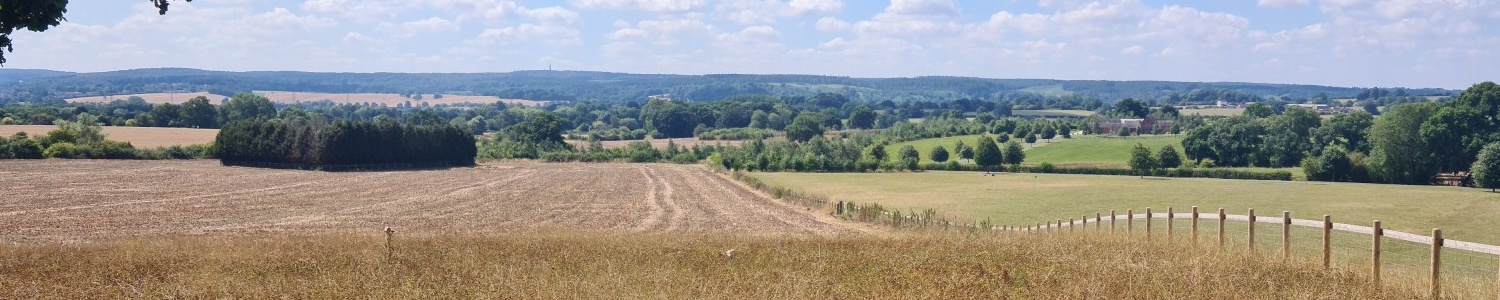
The picture below was taken from the lane just out the north-end of our village. It's hard to see the village through all the trees! It gives some impression of why we are in an area of the country often referred to as the 'Trent Valley'. Trent is the River Trent, our nearest major watercourse. On the horizon, you can just make out the radio tower situated at a place called 'Pye Green' in the Cannock Chase forest - a beautiful place, recognised oficially as a UK Area of Outstanding Natural Beauty (AONB). Pye Green tower was one of several erected up and down the UK as part of an alternative telecoms network in the Cold War period of our history. Now it supports only a very few radio broadcast and busines mobile radio aerials. I wish my aerials for VHF and UHF were up there, instead of being down here!
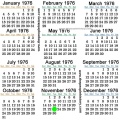
I was originally licenced in November 1976, at age 15, whist still a schoolboy. This callsign is the only one I have ever been issued with, so I'm both used to it and very fond of it. Now, at age 65 years, I am either an 'old-timer' already, or not far off being one. A student of Electrical and Electronic Enginnering, former Chartered Engineer and fairly recently retired from a career that spanned a very brief period in the motor vehicle manufacturing industry, followed by the bread-and-butter that was maintaining, designing, installing, managing and advising on the technology and workflows of media (mainly TV) production and broadcasting facilities.
I am interested in conversational-style phone operations on HF and (portable) on the VHF bands, especially 160, 80, 60, 40, 20, 17, 10 and 2 metres. I enjoy maintaining and operating state-of-the-art, computer-dependent, SDR transceivers and also state-of-the-art (as it was in the 1970s and '80s), no computer required, analogue transceivers, plus their usual accessories. I engage with the odd contest from time-to time, but am not so foolish as to believe my signals really are 5/9 in all those far-off places. Can't see me ever owning a digital voice mode VHF / UHF transceiver, or thinking contacts made using FT8 and similar minimal signal, minimal exchange modes represent worthwhile communications. In general, the less information passed over a communications channel, the less I seem interested in being a party to it. I suppose that implies I am more of a 'quality' over 'quantity' type of amateur and with a bias toward engineering more than operating.
I keep up the homebrew side of the hobby, mainly aerials, station accessories and long-term linear amplifier projects. I like to talk on the air about matters pertinent to the 'self-training in the art of wireless telegraphy', as it said in my original licence! I'm not averse to using the airwaves to arrange a trip down the pub with radio friends though! In my mind and junkboxes, I have a backlog of several hundred radio-related projects that would be interesting to get done. After 50 years trying, I am coming around to the view that not all of them will be. How I select which project I will focus on at any given time remains a mystery to me, but if something breaks on which I rely regularly, it usually gets priority.
Amateur radio is today typically described as a hobby, pastime and leisure interest. It is and has always been all of those things, of course, otherwise it would be 'professional' radio. For many an old-timer like me, however, there's more to it than that. Yes, considerably more important that just another pick-up, then throw-away-and-move-on pastime. Amateur radio, and the science, technology and engineering that underpins it, has to me across all these 50 years been an education, passion, religion and (possibly) an obsession. A source of pleasure, sometimes frustration and the odd near-death experience. The original social network, peppered with interesting characters, some of whom became lifelong friends. A gateway into technical studies, meeting my wife, having an interesting career and a good start to retirement!
Send an e-mail to g4fph@mjha.co.uk to arrange a sked or what have you?
If you need it for any reason, I have a page on QRZ.com, but intend to put most of the serious content on this, my own site. QRZ page for G4FPH
| Stafford - 160 / 80 metres | Stafford - 80 / 40 metres | Stafford - General coverage | Derby - 160 metre only |
|---|---|---|---|
|
|
|
|
| Receiver 1: 160 / 80 | Receiver 2: 80 / 40 | Receiver 3: General | Remote: 160 only |
| UK | Europe | North America | South America | USSR | Other and SWL |
|---|---|---|---|---|---|
 |
 |
 |
 |
 |
 |
| UK | Europe | North America | South America | USSR | Other and SWL |
| The pre-transmitting / pre-licensed years | Radio clubs and experiments | Studying for 'the ticket' | 26 November, 1976 |
|---|---|---|---|
 |
 |
 |
 |
| Getting the bug | Locals and friends | Helping hands | The big day arrives |
| 1976 - 1979 | 1980 - 1989 | 1990 - 1999 | 2000 - 2009 | 2010 - 2019 | 2020 - current |
|---|---|---|---|---|---|
 |
|
|
|
|
|
| Early days | The eighties | The nineties | The naughties | The tens | More recently |
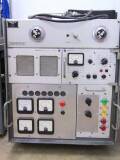
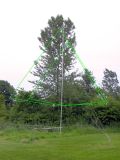
| Racal TTA 1885A | Henry 2000D-27 Linear Amplifier | The Shack 20 years ago | Radios | Amplifiers | Aerials | Projects | Worked All Chip Shops |
|---|---|---|---|---|---|---|---|
 |
 |
 |
|
 |
 |
 |
|
| Old transmitter | Old amplifier | Radio man-cave, 2003 | Tools of the trade | Keeping warm | Connecting to the aether | Projects | The antedote to awards |
Check out the Links (Do all web sites have to have these?!)
Sadly, in recent years, there's been a lot of doom and gloom about the future of amateur radio as a 'thing'. A visitor, seeing the aerials in my garden, asked me the other day, 'Is amateur radio as popular as it once was?'. I didn't know quite how to answer, so hesitated with my reply. 'No' might have summed matters up succinctly and seemed to be the answer that was expected. Should I have said: 'Yes - there are more valid amateur radio licences in the UK than ever before - over 100,000, in fact'? As to the number of anything like active licencees, that figure is surely a lot less however. Those circa 100,000 licences are held by around 80,000 individuals and 1,500 radio clubs. The UK national Amateur Radio society (Radio Society of Great Britain, RSGB) has just over 20,000 members. The RSGB Technical group hosted on www/groups.io has only around 1,500 members. Given the above numbers, the ratio of active amatuers to valid licences has likely diminished massively over the past 40 years. What might once have been a ratio of 80%, could now be 20%, or less.
What happened?
In an effort to reverse the obvious decline in the hobby, barriers to entry (breadth and depth of technical knowledge, operating skills, testing logistics, licence logistics and cost) have over the years been reduced and a (further) tiered licencing structure introduced. Profieciency in (even knowledge of) Morse code is no longer a requirement for any amateur licence type. Study for the UK entry-level amateur radio licence can be completed and the multiple-choice style exam (yes, passing an exam is still a requirement) sat in a single weekend, or less. To quote Thomas Paine: 'That which we obtain too easily, we esteem too lightly.' In the context of amateur radio, he could have been referring to the individual, to the standing of the hobby, to society. As a result of these reduced barriers, a greater proportion of amateurs than ever can afford to have little to zero interest in the technical underpinnings of the hobby. In 2026, it's not hard to imagine a UK in which future and further / complete deregulation could see part, or all, of amateur radio merged with other exam-free, licence-free, payment-free, radio classes, such as Citizens Band (CB) radio, 'PMR446', etc.
One crucial factor that continues to set amateur radio apart from technology platforms provided for us by others, however, is 'infrastructure'. It continues to be a unique characteristic that amateur radio needs no third-party provided infrustructure between sender and receiver. Dependency free (OK, except for electricity and some 'luminiferous aether' to support wave propagation), point-to-point, personal, world-wide communications. Many believe that amateur radio will play a significant role in emergency communications when the extinction event finally happens. This is yet to be tested!
Personally, I think the flavour, but not the specifics, of Amateur Radio that I have enjoyed has a future, so long as it is allowed to. Individuals (geeks, hackers, makers and those, like Dilbert, having the 'knack') with interest and curiosity in science, technology, electronics, computing and communications will continue to find the hobby and, over time, make it their own. Their 'own' will likely be quite different to that of others' who were at their most curious in the 1960s, 1980s, 2000s, etc. Hopefully these new champions will find breadth and depth in the hobby and it will prove rewarding and useful to them personally and maybe even benefit society in some small way. Hopefully there will be enough of these individuals that government will continue to grant them the rights and privileges they need to do their thing. They will deem any education, testing and financial obstacles put in their way to obtain licences to transmit worth overcoming.
Copyright 2026 Mark Hill, G4FPH.
Last modified: 18 October, 2026.